The Söderfjärden meteorite crater was formed about 520 million years ago. When the impact occured, there was no life on land.
The story of the crater's creation is presented in the Meteoria's exhibitions through a dramatic multimedia show, displays of drillcores and crater rocks, crater models, as well as illustrations in illuminated displays. The exhibitions explain what happens when an asteroid approximately 300 meters in diameter strikes the Earth. With a diameter of 5-6km, Söderfjärden is considered a medium-sized crater compared to the Earth's other craters.
The birth of the Söderfjärden crater – a story
from Matts Andersén's book WHEN THE SKY FALLS DOWN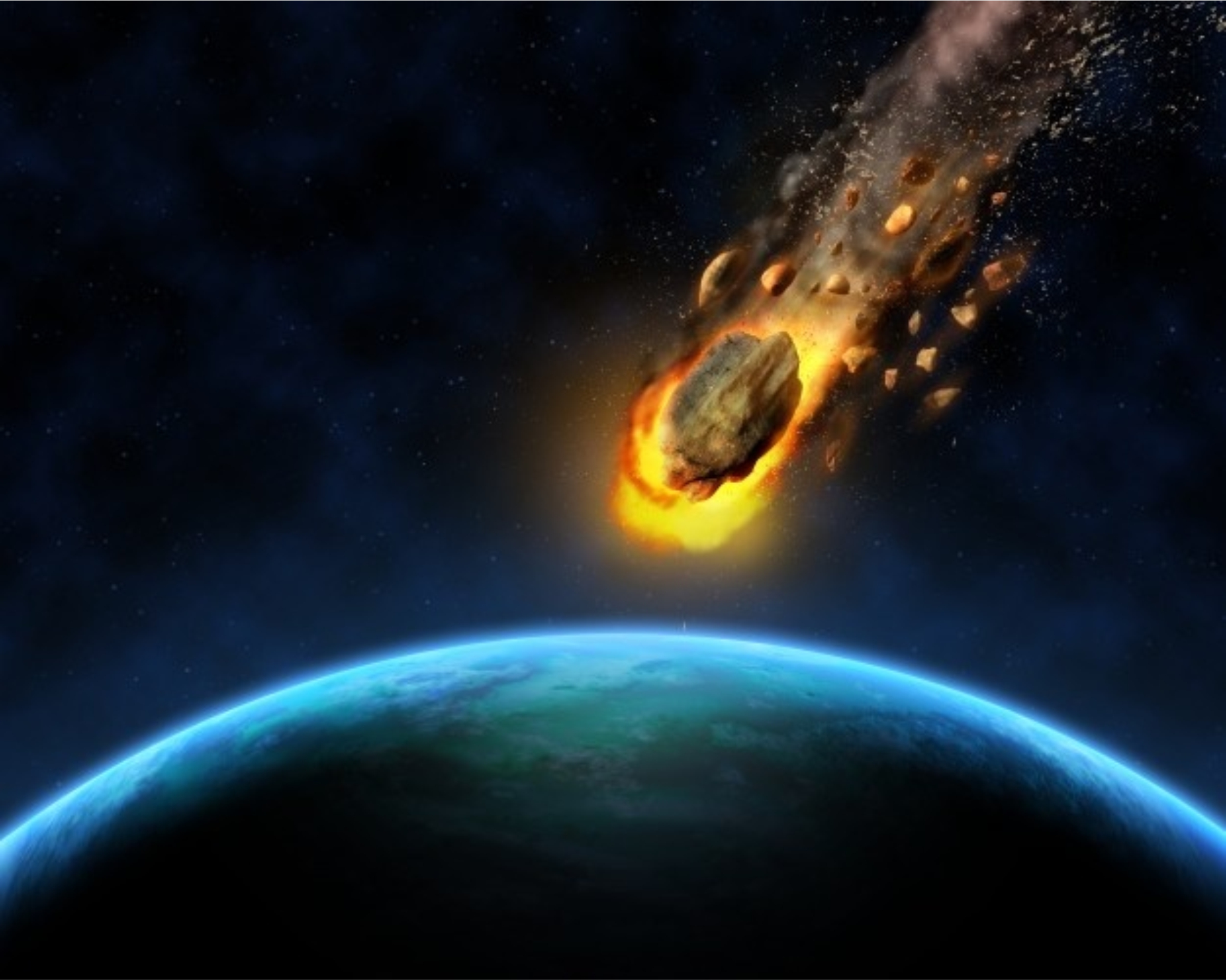
”... A dark asteroid drifts through space towards the Earth, which appears in the distance as a blue and greyish-brown sphere. No greenery and no ice can be seen on the sphere. Quickly, the distance to the Earth shrinks...
Suddenly, flames burst from the asteroid. Burning fragments break away from the celestial body. Within three or four seconds, a great ball of fireand several flaming fragments plunge towards the Earth
In a fraction of a second, a giant fireball rises above the impact site. A thousand suns cast an intense glow across vas waters and over barren land...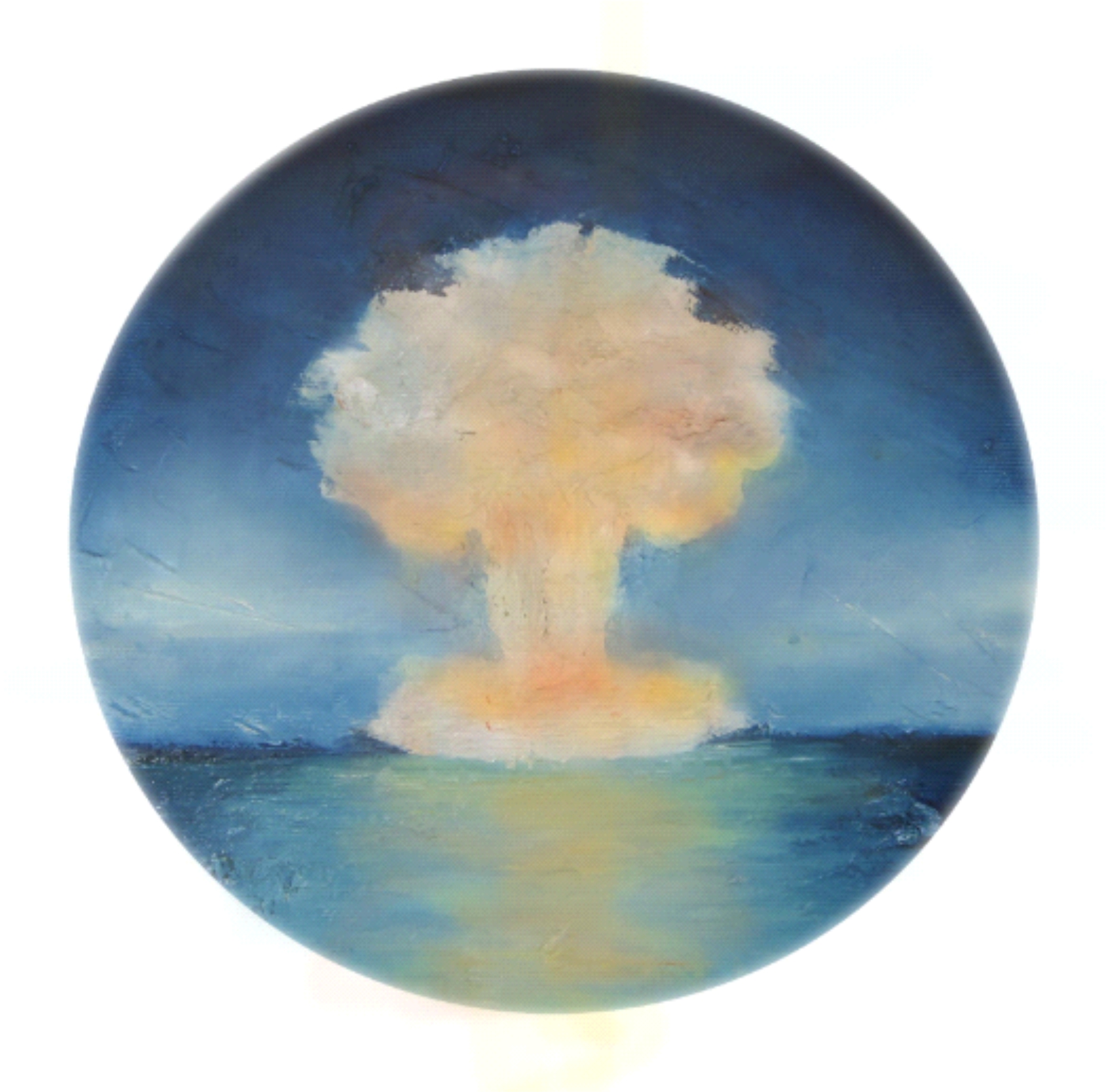
The white-hot fireball appears to reach enormous temperature – seawater, seabed sediments and bedrock are vaporised. A wide and deep crater is formed in an explosive instant as vast amounts of material are gouged out from the Earth's crust. Huge blocks of bedrock are hurled beyond the crater's rim, stones the size of heads and fists are thrown tens of kilometers away, while gravel, sand and fine dust are scattered hundreds of kilometers. A colossal crater is created in moments..
The giant fireball above the impact site changes color and shape. Expanding masses of gas swirl in shades of yellow, red and gray. All water in and around the enormous pit evaporates and boils away in the intense heat...
... The mushroom cloud rises even higher. From a distance, the event resembles footage of a nuclear explosion...
... Even after a full day, the heat inside the crater remains so high that all incoming seawater instantly evaporates with a hiss.
The enormous amount of energy that heated the crater floor during the impact will apparently keep the crater steaming for years..."
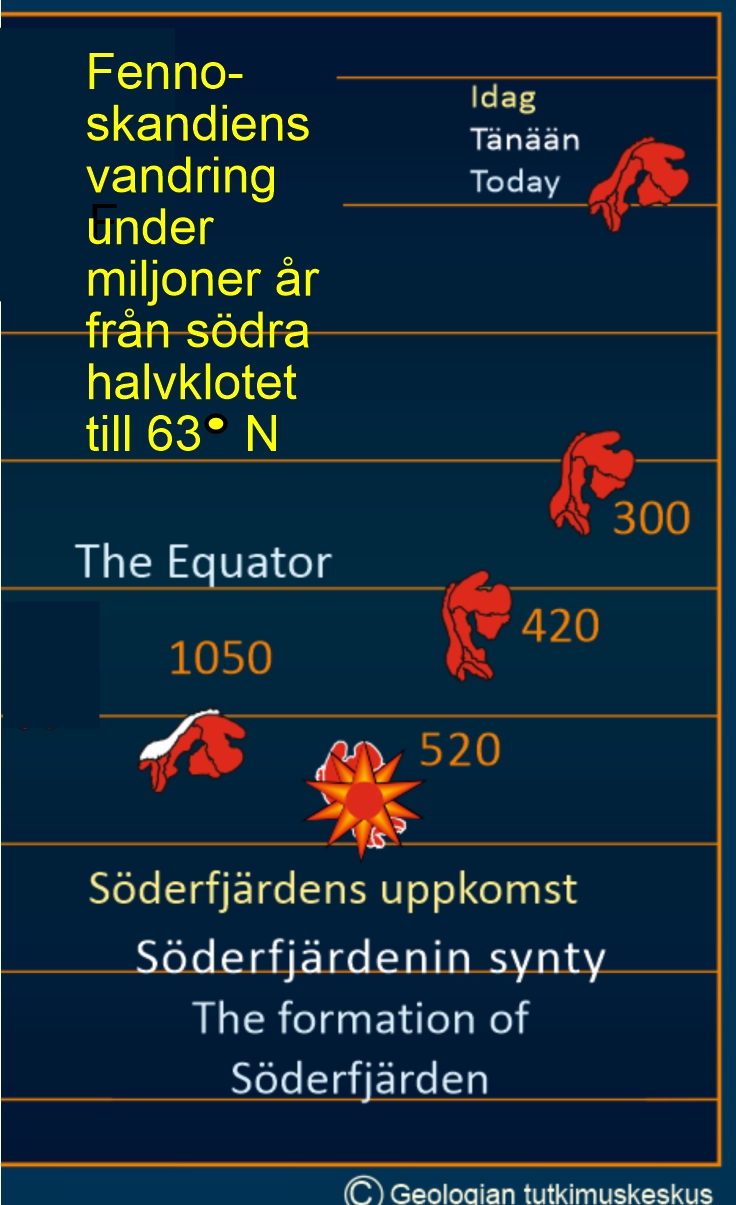
Then years, centuries, and millennia pass; altogether about 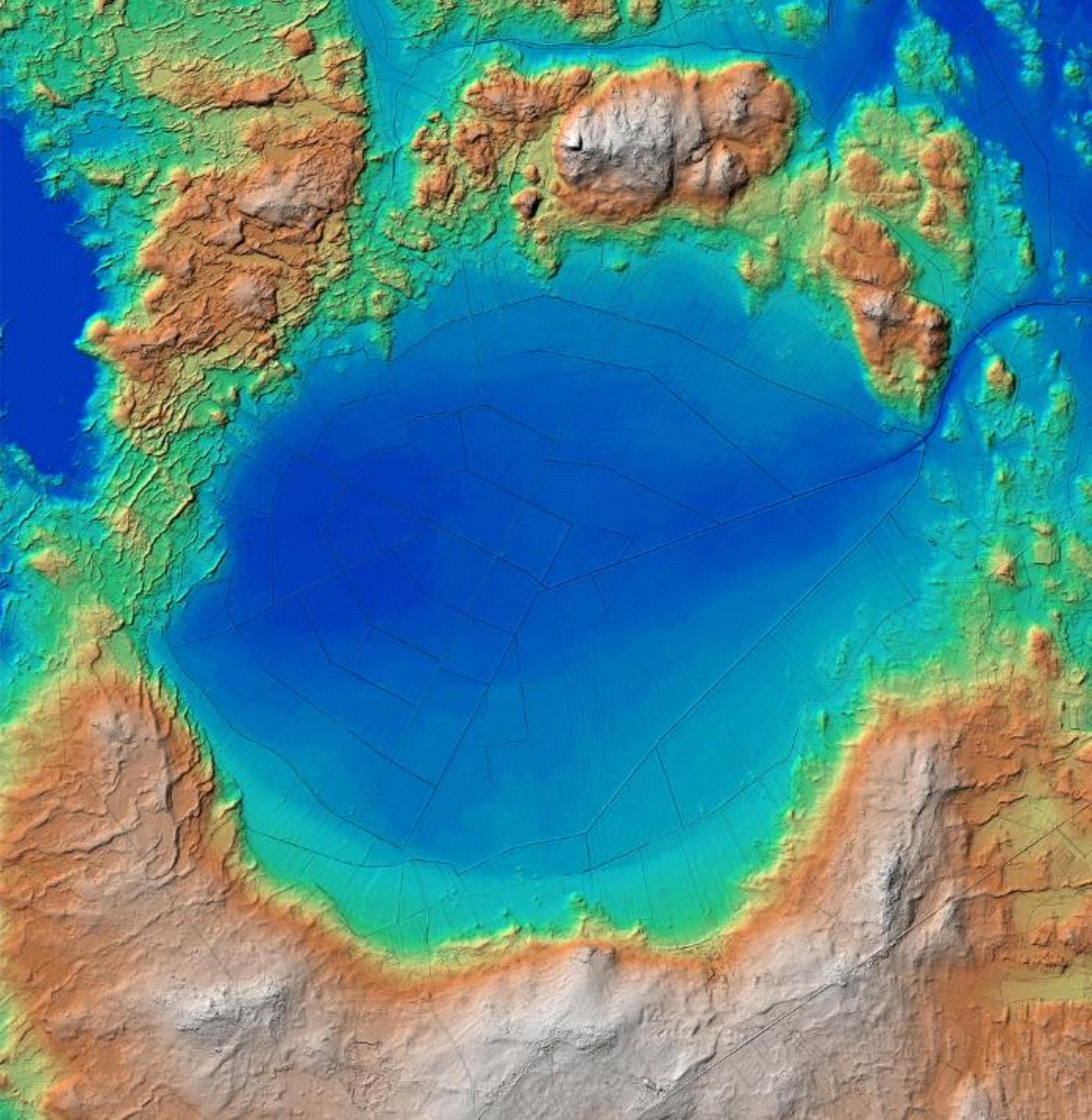
520 million years. During this time, the crater is carried northward with the Fennoscandian landmass from the Southern Hemisphere to 63 degrees nort.
<<< see picture to the left ---
----- laser-scanned picture
of Söderfjärden today>>>
GTK
Over millions of years, the crater depression gradually fills with sediments, and even the crater rim becomes buried beneath thick sedimentary layers. Thanks to this protective sediment cover, which laid over the entire crater for hundreds of millions of years, Söderfjärden is today Finland's most beautiful meteorite crater and one of the best-preserved impact craters on Earth.
Over many millions of years, the sedimentary layers were worn away by erosion (wind, water, ice), and allowing Söderfjärden's crater rim to re-emerge and become visible.
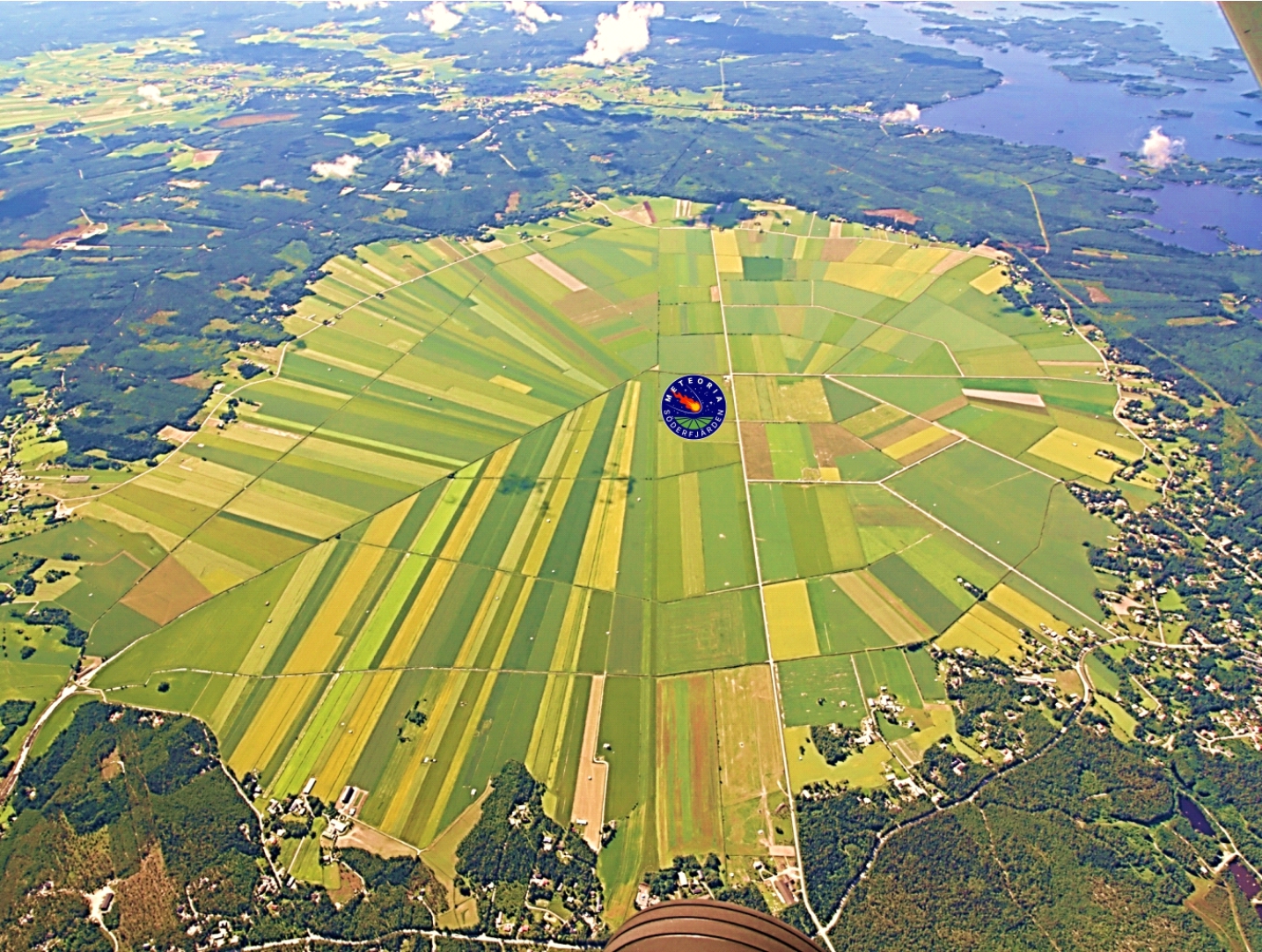
Söderfjärden is one of about 200 meteorite craters on Earth – making it an exceptionally rare natural formation.
In the aerial photograp, the Meteoria's marks the location of the visitor center – here visitors can experience the crater's dramatic history and remarkable present through advanced exhibitions.
The Meteoria is managed by the Meteoria section of the Sundom Village Association in collaboration with the Vasa Andromeda Astronomical Association.

| Address | Marenvägen 294 65410 Sundom (Vaasa) |
|---|---|
| Phone | +358 50 5565199 |
| meteoria@sundom.fi |