The site, located beneath a large boulder on Öjberget, is currently the only known Stone Age site in the Vaasa region. Charred bones were found in the cavity beneath the boulder during archaeological excavations in the early 2000s. Carbon-14 analysis has confirmed that the bones are nearly 4 000 years old. This is undoubtedly the oldest evidence of human presence found in the Vaasa area. The carbon-14 analysis carried out at the dating laboratory at the University of Helsinki indicates that the bones were burned approximately 3 800 years ago – that is, in the late Stone Age.
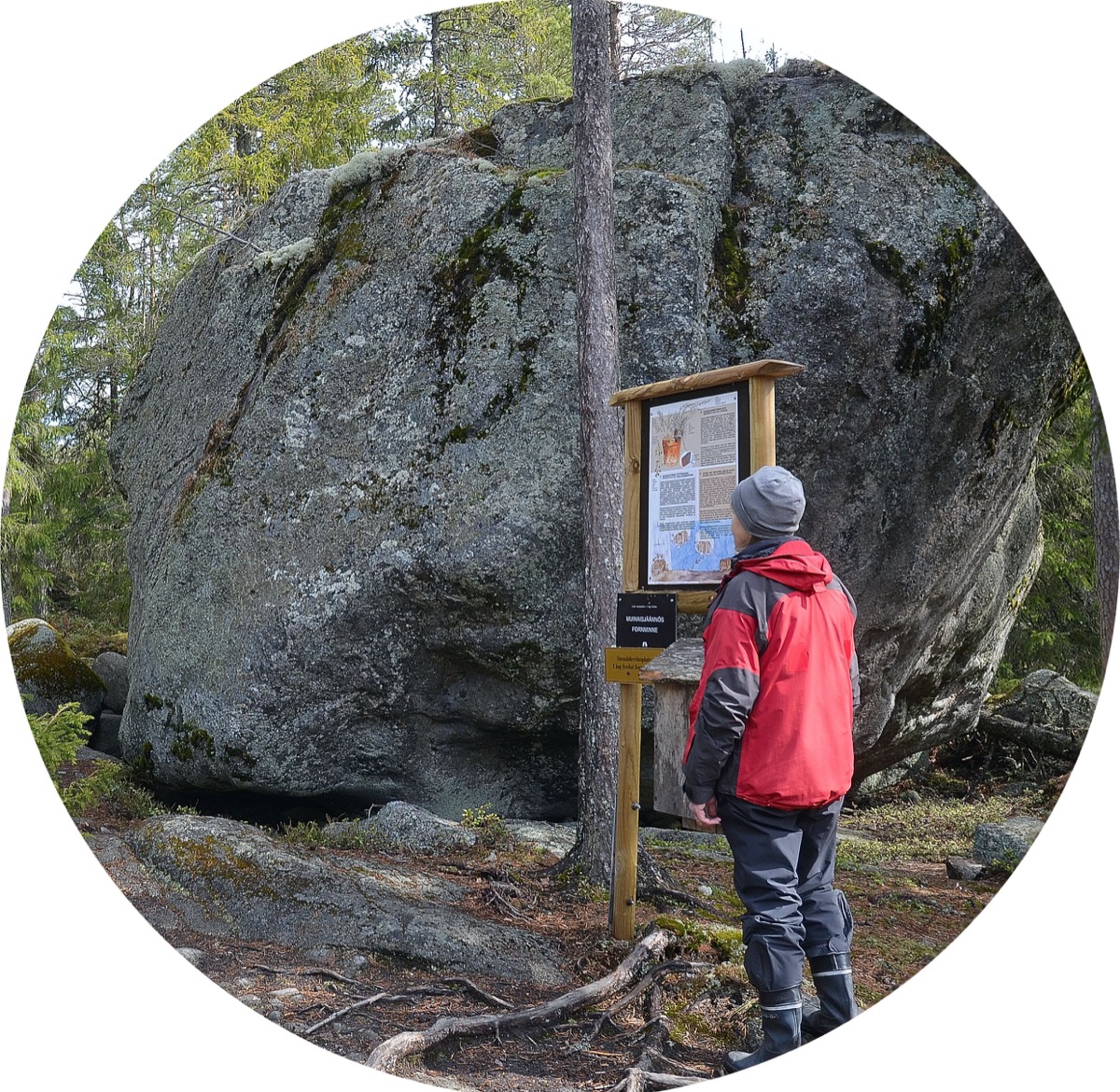
Quartz and sandstone flakes, as well as burnt stones (‘cooking stones’), have also been found at the same site in the cave-like space beneath the boulder at +46 metres above sea level.
At the end of the Stone Age, Öjberget was a small island far out in the Western Sea. At that time, the island was barely a kilometer long, and no more than half a kilometer wide. The distance to the nearest mainland beach to the south-east, present-day Laihela, was nearly 30km.
The Öjberget island of that era was probably a rich seasonal hunting ground, where people could fish and hunt seals. The cavity beneath the boulder offered good shelter from the elements.
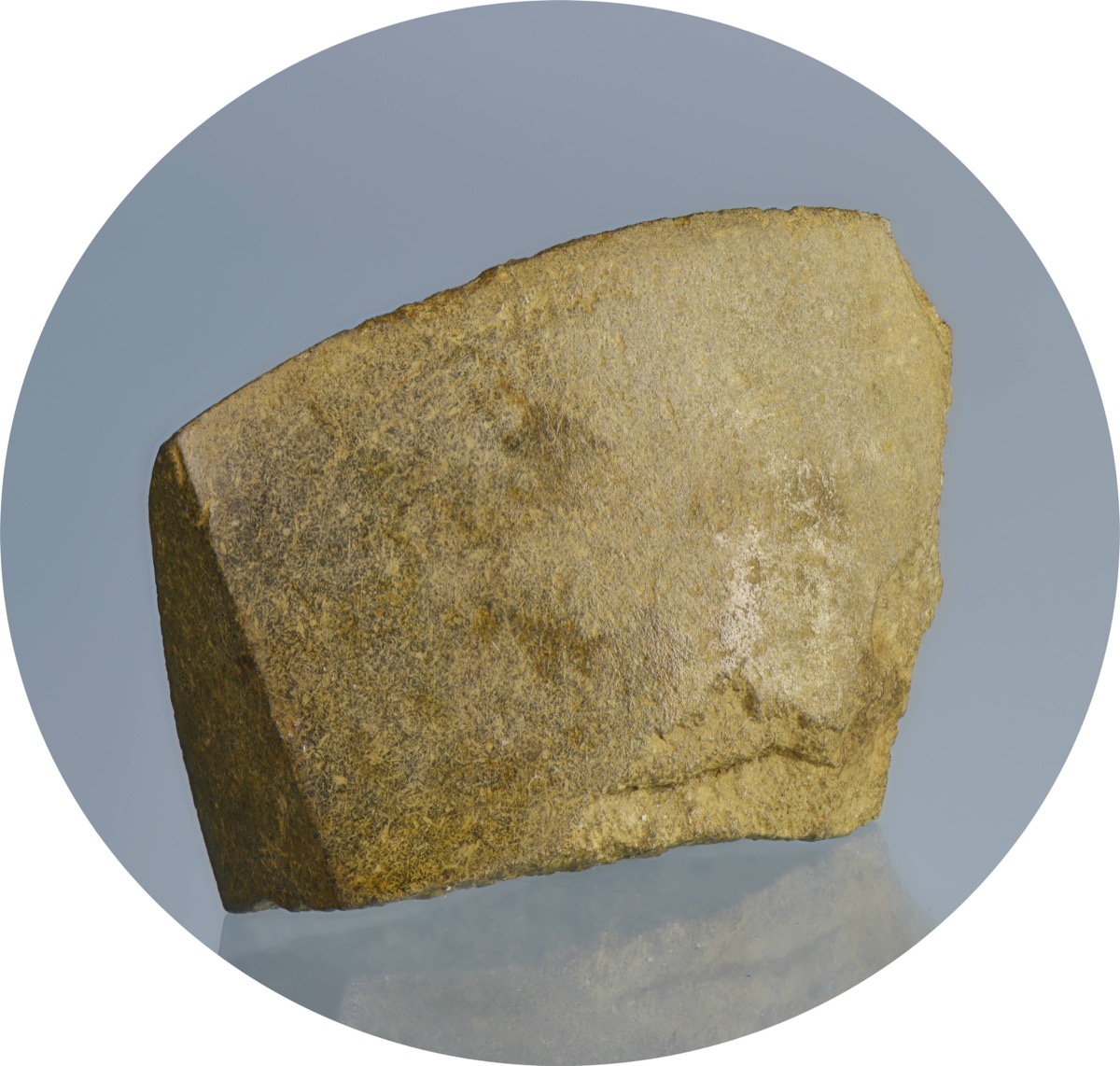
During the most recent archaeological excavation under the boulder (in 2005), the blade of a stone chisel was found, which has been finely polished by human hands. The blade part which has been broken off, is approximately 4 cm wide and approximately 2.5 cm long. The blade is chisel-shaped and resembles a small axe with a sharp cutting edge. The handle section of the broken chisel has not been found. Stone Age hunters may have sharpened a new cutting edge on the handle.
The Stone Age chisel is made of slate. The chisel has been examined at the Geological Survey of Finland by Satu Hietala, who states that the distinctive stone material in the ancient tool originates from the shores of Lake Onega in Russian Karelia. Therefore, the stone has travelled a thousand kilometers before ending up at Öjberget. Stone Age seal hunters probably traded for the chisel at a marketplace or from travelling merchants. Payment may have been made in sealskins and/or salted seal fat.
The stone chisel from the Stone Age site at Öjberget is kept at the Ostrobothnian Museum.
More about this site can be found in the book WHEN THE SKY FALLS DOWN, author Matts Andersén, pages 92-94.
The Meteoria is managed by the Meteoria section of the Sundom Village Association in collaboration with the Vasa Andromeda Astronomical Association.

| Address | Marenvägen 294 65410 Sundom (Vaasa) |
|---|---|
| Phone | +358 50 5565199 |
| meteoria@sundom.fi |